

Prebiotics are often overshadowed by their better-known "relatives", probiotics. While probiotics contain certain live microorganisms, prebiotics are substances that are specifically utilized by selected microorganisms in the body and can therefore have a health benefit. Many prebiotics belong to the fiber group and serve as a food source for certain gut bacteria.
But which foods contain prebiotic fibers? How are they processed in the gut and what is scientifically known about their possible effects? In this article, you will learn what prebiotics are, which foods provide them and how they differ from probiotics.
What exactly are prebiotics?
Prebiotics are substances that are specifically utilized by certain microorganisms in the body and can therefore have a health benefit. Many well-known prebiotics are indigestible carbohydrates that pass largely undigested through the small intestine and are fermented by gut bacteria in the large intestine. However, not every fiber is automatically a prebiotic.
Known prebiotic substances or groups of substances include:
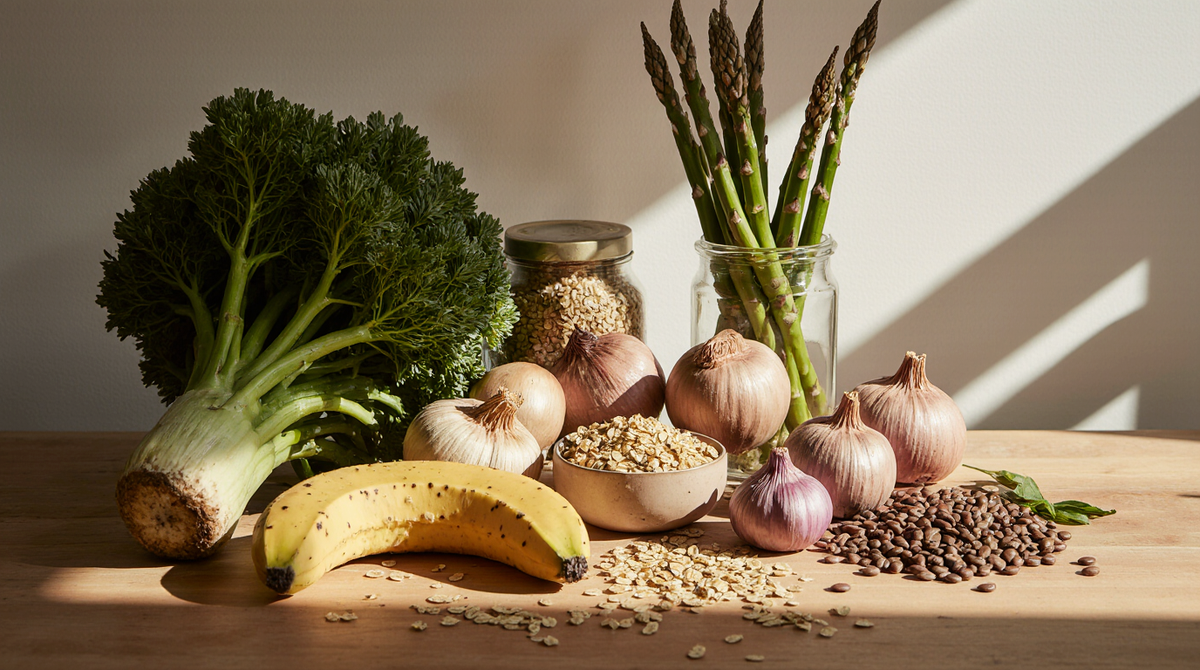
- Inulin: is found, for example, in chicory and Jerusalem artichoke.
- Fructooligosaccharides (FOS): are contained, among others, in onions and garlic.
- Galactooligosaccharides (GOS): are found, for example, in legumes.
- Resistant starch: is not fully digested in the small intestine and can be fermented in the large intestine.
- Certain beta-glucans: are contained, among others, in oats; their properties depend on their respective form and structure.
Different gut microorganisms can utilize these substances. Bacteria from the Bifidobacterium group and certain lactic acid bacteria are frequently studied in this regard, for example. The effect depends, among other things, on the substance in question, the amount consumed, and the individual composition of the gut microbiome.
What prebiotics do in the gut
1. Prebiotics and the gut microbiome
The gut microbiome is a complex ecosystem of bacteria and other microorganisms. It is involved in various digestive and metabolic processes.
Certain prebiotic substances can be utilized by selected gut bacteria. This can change the composition and activity of the gut microbiome. What changes occur depends on the type of prebiotic and other individual factors. A specific effect therefore cannot be promised generally for all prebiotics.
2. Fermentation produces short-chain fatty acids (SCFAs)
When gut bacteria ferment certain prebiotic fibers, short-chain fatty acids (English: short-chain fatty acids, SCFAs) are produced, among others. The most important include:
- Butyrate (butyric acid): serves as an important energy source for the cells of the large intestine.
- Propionate: is incorporated into metabolic processes after its formation, among others.
- Acetate: is a commonly occurring short-chain fatty acid and can be utilized by various tissues.
These metabolic products are part of the complex processes in the large intestine. Which short-chain fatty acids are produced in what quantity depends, among other things, on the available substrates and the composition of the gut microbiome.
3. Prebiotics and the immune system: What is being researched?
The gut microbiome and the immune system are connected through various biological mechanisms. Short-chain fatty acids and other microbial metabolic products are also being scientifically investigated in this context.
The results vary depending on the prebiotic, the group of people studied, and the study design. Therefore, one should not assume that all prebiotic foods affect the immune system in the same way or guarantee a specific effect.
4. Fiber and digestion
Fiber contributes to a high-fiber diet. Depending on the type, it can, for example, increase stool volume or influence the consistency of the stool. Some fermentable fibers are broken down by gut bacteria, while others are less easily fermentable.
A varied diet with vegetables, fruit, whole grains, and legumes is a practical way to consume different types of fiber. If you eat little fiber so far, it is best to increase the amount gradually and ensure adequate fluid intake.
5. Prebiotics and the gut-brain axis
The gut-brain axis describes the communication between the gut and the brain via various signaling pathways. These include nerve connections, hormonal and immunological processes, as well as microbial metabolic products.
What role certain prebiotic fibers and changes in the gut microbiome play in these processes is being scientifically investigated. The research is complex and does not allow for a general statement that prebiotics reliably improve mood, concentration, or psychological well-being.
6. Prebiotics and the mineral balance
Certain fermentable fibers can change the environment in the large intestine. During their fermentation, short-chain fatty acids are produced, among others, which can influence the pH value in the intestinal contents. This can change the solubility of certain minerals.
Whether and to what extent this results in altered mineral absorption depends, among other things, on the substance in question, the diet, and individual circumstances. Prebiotics should therefore not be generally presented as a means to improve mineral absorption.
7. How many prebiotics do you need?
There is no uniform daily intake of prebiotics that applies to all people. However, the recommendations for total fiber intake provide a good orientation: The German Nutrition Society recommends that adults consume at least 30 g of fiber daily.
Part of this can come from foods that contain known prebiotic fibers. Good examples are:
- Chicory and Jerusalem artichoke: contain inulin.
- Onions, garlic, and leeks: provide fructans, among others.
- Legumes: contain various fermentable carbohydrates, including GOS.
- Oats: provide beta-glucans.
- Bananas: can contain resistant starch; the proportion depends, among other things, on the ripeness.
- Cooled potatoes or rice: can contain more resistant starch after cooling than freshly cooked, still hot versions.
How well individual foods are tolerated varies from person to person. Larger amounts of certain fermentable fibers can cause bloating or other digestive discomfort in sensitive people. Therefore, it makes sense to adapt the selection and quantity to your own tolerance.
Fermented drinks such as kombucha are not automatically prebiotics either. Whether a food has prebiotic properties depends on its specific ingredients and the scientific evidence.

8. Prebiotics and probiotics – what is the difference?
Probiotics are live microorganisms that have a proven health benefit when consumed in sufficient amounts. Prebiotics are substances that are specifically utilized by certain microorganisms and can therefore have a health benefit.
Products that combine suitable probiotic microorganisms and prebiotic substrates are called synbiotics. The specific microorganisms, substrates, and quantities used are important. Not every combination of live cultures and fiber automatically meets this definition.
9. What is kombucha – prebiotic or probiotic?
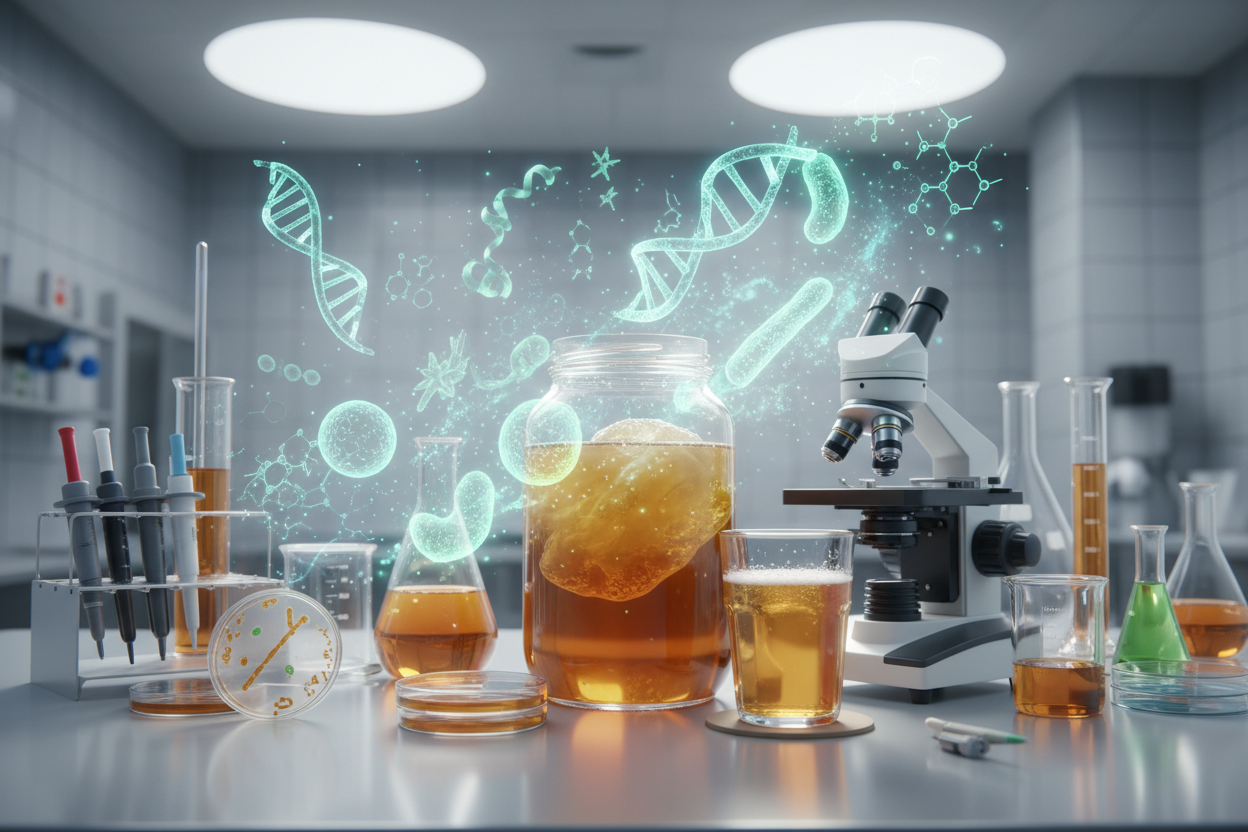
Kombucha is a fermented tea drink made from sweetened tea and a community of bacteria and yeasts. Depending on the manufacturing process, unpasteurized kombucha can contain live microorganisms, organic acids, and other fermentation products.
Is kombucha a probiotic? Not automatically. The mere presence of live microorganisms is not enough to classify a drink as a probiotic. For this, the microorganisms must be defined, among other things, and a health benefit must be proven.
Is kombucha a prebiotic? This classification cannot be made generally for kombucha either. Prebiotic properties depend on certain ingredients and the corresponding scientific evidence.
Kombucha can therefore best be described as a fermented tea drink. Whether a specific product meets certain prebiotic or probiotic criteria must be assessed based on its composition and the available evidence.
Create your individual 30-day routine
Frequently asked questions about prebiotics
What is the difference between prebiotics and probiotics?
Probiotics are live microorganisms with a proven health benefit when consumed in sufficient amounts. Prebiotics are substances that are specifically utilized by certain microorganisms and can therefore have a health benefit.
Which foods contain prebiotics?
Well-known examples are chicory, Jerusalem artichoke, onions, garlic, leeks, legumes, and oats. Which prebiotic substances are contained varies depending on the food.
Are all fibers prebiotics?
No. Fiber includes different substances with different properties. Only certain substances meet the scientific definition of a prebiotic.
Is kombucha a prebiotic or probiotic?
Kombucha is a fermented tea drink. Whether a specific product can be classified as prebiotic or probiotic depends on its composition and the scientific evidence. Fermentation and live cultures alone are not enough.
Conclusion: Prebiotics as part of a high-fiber diet
Prebiotics are certain substances that can be utilized by selected microorganisms. During the fermentation of certain prebiotic fibers, short-chain fatty acids such as butyrate, propionate, and acetate are produced. What effects occur depends on the respective substance and other individual factors.
A varied diet with vegetables, fruit, whole grains, and legumes helps to consume different fibers. It is most sensible to incorporate different foods and adapt the quantity to your own tolerance.







Share: