

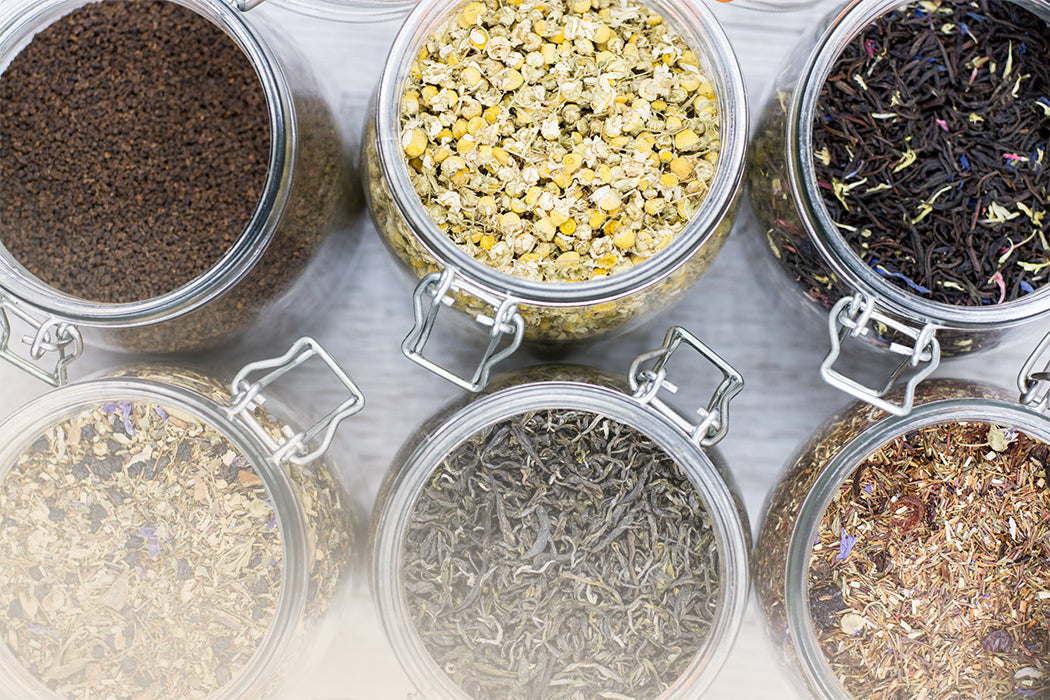

We help you find the right tea for making kombucha at home
Good tea is an important foundation for flavorful kombucha. For centuries, kombucha has traditionally been made with tea from the Camellia sinensis plant. This plant belongs to the camellia genus (Camellia) and the tea family (Theaceae). Black, green, white, and oolong teas are made from its buds and leaves, among other things. Black, green, white, and oolong teas therefore come from the same tea plant. Their differences arise mainly from how the harvested leaves are processed. Growing conditions, harvest time, and preparation also affect the flavor.
Why do you need tea for kombucha?
The kombucha culture consists of various bacteria and yeasts. Tea from Camellia sinensis provides the fermentation with polyphenols, nitrogen compounds, and other plant components, among other things. Together with sugar, they form the basis for the activity of the microorganisms. The flavors and ingredients present in the finished kombucha depend on the type of tea, the culture, and the manufacturing process, among other factors.
For regularly making kombucha, unflavored black or green tea is particularly recommended. White tea and oolong can also work. If you want to try other types of tea, it is best to first mix them with a proven tea base.
Possible teas for delicious kombucha
Black tea
If your SCOBY could talk, it would probably often choose black tea. Black tea is a proven base for kombucha and is well suited for a flavorful, robust brew. However, how quickly the fermentation takes place depends not only on the type of tea, but also on the temperature, amount of sugar, culture, and other conditions.
Our favorites:
- Golden Monkey
- Darjeeling
- Friesenmischung (Assam, Ceylon, Indian Himalayas)
Green tea
Green tea often gives kombucha a fresh, slightly grassy, or mild aroma. Depending on the variety and preparation, sweet or slightly tart notes can also develop. Green tea is also suitable as a base for kombucha fermentation. Whether your SCOBY grows faster or slower with it than with black tea cannot be said generally.
Our favorites:
- Sencha & Matcha
- New Spring
- Chun Mee
If you want to use matcha, keep in mind that it is finely ground green tea. It can make the kombucha cloudier and leave more tea particles in the brew. For getting started, a classic green tea like sencha is an uncomplicated choice.
White tea
White tea is made from Camellia sinensis, just like green and black tea. It is often appreciated for its mild, delicate aroma. White tea can also be used for kombucha. How well the culture works with it and how the result tastes depends on the specific variety, preparation, and fermentation conditions.
Our favorites:
- Silbernadel
- Shou-Mei
Oolong tea
Oolong tea is a traditional tea whose oxidation level is between that of green and black tea. Depending on the variety and processing, it can taste floral, fruity, roasted, or slightly honey-like. Oolong can also be a suitable base for kombucha and can be combined with other teas from Camellia sinensis.
Our favorites:
- Red Robe
- Iron Goddess
- Phoenix Mountain
What water is suitable for brewing the tea?
Water quality can also affect kombucha fermentation. Tap water is generally suitable. However, the composition of the water, such as its minerals and any possible chlorine content, can affect the taste and, under certain conditions, the microorganisms. If there is a noticeable chlorine smell or unusual taste, check the water quality first. Additional filtration is not necessarily required, but may be useful depending on the local water composition. Only use the brewed tea once it has cooled to the temperature suitable for your kombucha brew.
Which tea is not good for your kombucha?
Important! There are some simple rules when choosing tea that will help you maintain a stable kombucha culture.
- Use unflavored tea for regular fermentation whenever possible. Heavily flavored tea blends and herbs with a high content of essential oils are less suitable as the sole tea base.
- Loose tea is easy to dose and its composition is easy to trace. Unflavored tea bags can also be used.
- If you want to try fruit or herbal tea, first mix it with black or green tea. Do not use such blends as the sole tea base for a continuously maintained culture without further consideration.
- Avoid teas with added oils, artificial flavors, or other ingredients whose suitability for fermentation is unclear.
Summary: Which tea is best for kombucha?
For getting started, unflavored black or green tea from Camellia sinensis is a good choice. Black tea often provides a robust aroma, while green tea can add fresher and milder notes. White tea and oolong are also possible alternatives. The important thing is that you use a suitable tea base and observe how your culture develops under consistent fermentation conditions.
Frequently asked questions about tea for kombucha
Which tea is best suited for kombucha?
For most beginners, unflavored black or green tea is suitable. Both come from Camellia sinensis and provide suitable plant components for fermentation.
Can I make kombucha with only green tea?
Yes, green tea can be used as the sole tea base. Observe the taste and fermentation of a new brew and keep the other conditions as constant as possible.
Can I use herbal tea or fruit tea for kombucha?
For a continuously maintained kombucha brew, it is advisable to first mix herbal or fruit tea only with black or green tea. Many pure herbal and fruit teas differ significantly from classic tea from Camellia sinensis and are not the most reliable choice as the sole base.
Do I have to use loose tea?
No. Loose tea is easy to dose, but unflavored tea bags can also work. What is more important than the form of presentation is that the tea is suitable for fermentation and free from unsuitable additives.
What water should I use for kombucha?
In many cases, tap water is suitable. If there is a strong chlorine smell or noticeable taste, it may be useful to check the water quality and, if necessary, use filtered water.







Share: