




What ingredients can be produced during kombucha fermentation?
To help you understand which organic acids, vitamins, enzymes, and other plant compounds are described in connection with kombucha, we have taken a closer look at the individual components in this article. Learn which ingredients can be produced during kombucha fermentation, what role they play, and why their actual composition depends on the respective beverage.
Organic acids in kombucha
Amino acids
Amino acids are the building blocks of proteins and serve different functions in the human body. Whether and which amino acids are contained in a particular kombucha depends on the starting ingredients, the culture used, and the fermentation conditions. The composition of the tea and the duration of fermentation can also influence the properties of the finished beverage.
Succinic acid
Succinic acid, also known as succinate, is a naturally occurring organic acid and an intermediate product of various metabolic processes. It can also be produced during microbial fermentation. Whether and in what quantity it occurs in kombucha depends on the culture and the manufacturing process.
Butyric acid
Butyric acid, or butyrate, belongs to the short-chain fatty acids. It can be produced through certain microbial metabolic processes. Butyrate is also produced by certain microorganisms in the human large intestine. However, its presence cannot be assumed for every kombucha, but must be investigated for the specific product.
Acetic acid
Acetic acid produced during kombucha fermentation contributes to the acidic environment that can make it difficult for many unwanted microorganisms to grow. Acetic acid is a characteristic organic acid from various fermentation processes and contributes significantly to the typical tart taste of kombucha. It can be produced, among other things, when microorganisms oxidize alcohol into acetic acid. Its concentration depends on the culture and the respective fermentation conditions.
Gluconic acid
Gluconic acid can be produced during the microbial conversion of glucose. Bacteria of the genus Gluconobacter can be part of certain kombucha cultures and be involved in the formation of organic acids. How much gluconic acid is contained in the finished kombucha depends, among other things, on the composition of the culture and the conditions during fermentation.
Glucaric acid
Glucaric acid is an organic acid that is studied in connection with various natural metabolic processes and plant-based foods. Glucaric acid and related compounds have also been scientifically studied in connection with kombucha. Whether and in what quantity these compounds occur in a particular kombucha depends on the recipe and the manufacturing process.
Enzymes
Enzymes are biological molecules that enable or accelerate chemical reactions. During fermentation, microorganisms use various enzymes to break down and convert components of the starting product. These processes contribute to the change in the composition of the sweetened tea during kombucha fermentation. Which enzymes are still present and active in the finished beverage depends on the culture and the manufacturing process.
Catechins and other polyphenols
Polyphenols are natural plant compounds that occur, among other things, in tea. Catechins belong to this group and are particularly characteristic of green tea. How the composition and concentration of these plant compounds change during kombucha fermentation depends on the starting tea, the culture used, and the fermentation conditions, and is scientifically investigated. Therefore, the presence of polyphenols in tea does not directly indicate their content in the finished kombucha.
Vitamins
Vitamins serve numerous important functions in the human body. In connection with kombucha, it is investigated which vitamins come from the starting ingredients or may be present during fermentation. The actual vitamin content can vary depending on the recipe and manufacturing process. The following descriptions explain the general functions of the respective vitamins and are not evidence that every kombucha contains them in relevant quantities.
B vitamins
The B vitamins include various water-soluble vitamins. In scientifically studied kombucha samples, different B vitamins were detected depending on the starting ingredients and manufacturing process. However, this does not mean that every kombucha contains these vitamins in relevant quantities. Whether a specific vitamin is present in the finished beverage and in what concentration must be determined in the specific product.
Vitamin B1
The body needs vitamin B1, also known as thiamine, to metabolize nutrients from our food. It contributes to normal energy metabolism and normal nervous system function. Whether kombucha contains vitamin B1 in relevant quantities depends on the respective product.
Vitamin B2
Vitamin B2, also known as riboflavin, is an essential nutrient and contributes, among other things, to normal energy metabolism and the protection of cells from oxidative stress. The actual content in kombucha can vary depending on the starting ingredients and manufacturing process.
Vitamin B3
Vitamin B3, also known as niacin, is an essential nutrient and contributes, among other things, to normal energy metabolism and normal nervous system function. Whether a particular kombucha contains vitamin B3 in relevant quantities must be assessed based on the respective product.
Vitamin B5
Vitamin B5, also known as pantothenic acid, contributes, among other things, to normal energy metabolism and normal mental performance. Whether a kombucha contains relevant quantities of this vitamin must be determined in the specific product.
Vitamin B12
Vitamin B12, also known as cobalamin, contributes, among other things, to the normal formation of red blood cells and the reduction of tiredness and fatigue. Fermentation alone does not mean that a kombucha contains vitamin B12 in relevant quantities. This must be analytically determined for the specific product.
Vitamin C
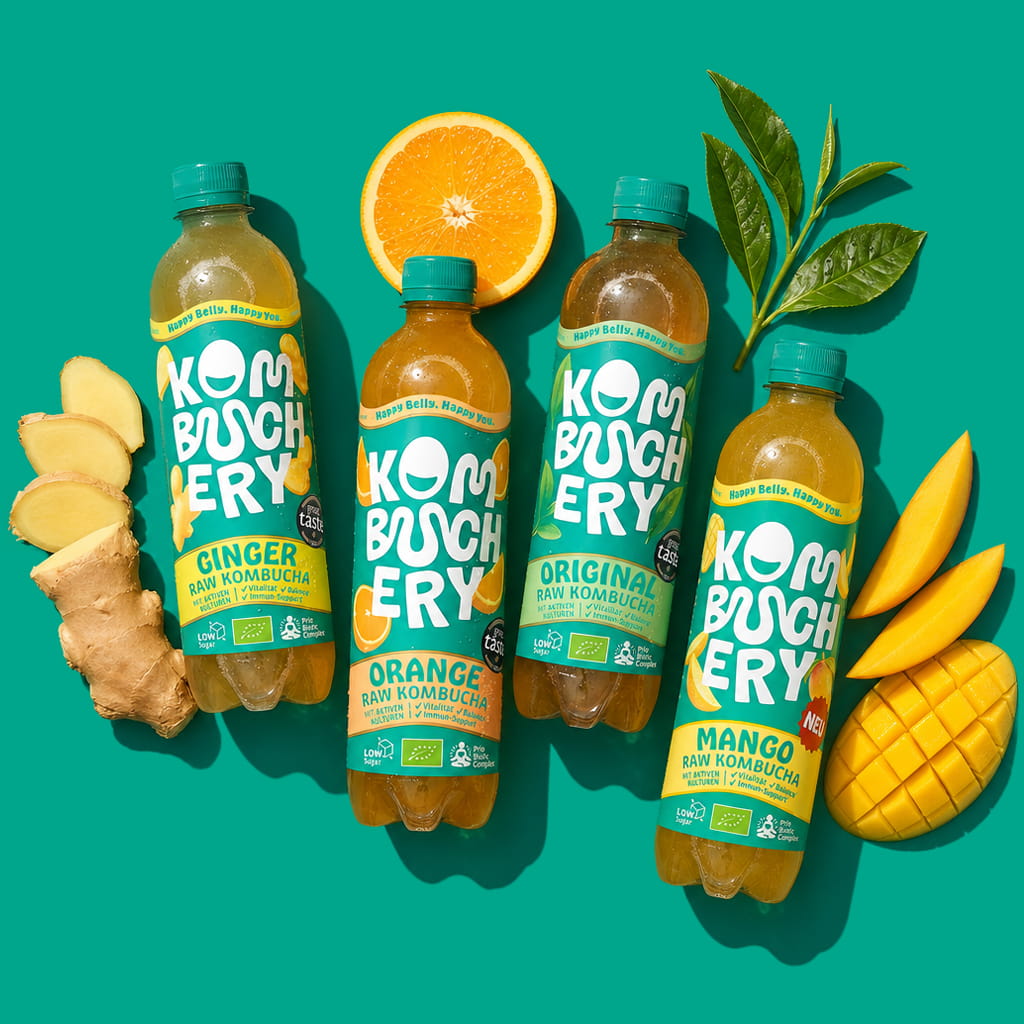
Vitamin C, also known as ascorbic acid, is an essential vitamin that must be obtained through diet. It contributes, among other things, to normal immune system function, normal energy metabolism, and the protection of cells from oxidative stress. Kombuchery naturally contains vitamin C from acerola.*
Live lactic acid bacteria
Depending on the composition, kombucha cultures can contain different bacteria and yeasts. Which microorganisms are present in the finished kombucha and whether they are still alive at the time of consumption depends heavily on the culture, the manufacturing process, and storage. The quantity and composition of the microorganisms can also vary. The presence of live cultures alone does not prove a specific probiotic effect.
Frequently asked questions about kombucha ingredients
What organic acids can occur in kombucha?
Various organic acids can be produced during kombucha fermentation. This includes acetic acid in particular; depending on the culture and manufacturing conditions, other acids such as gluconic acid or succinic acid may also occur. The actual composition and concentration vary depending on the product.
Does kombucha contain B vitamins and vitamin C?
Various vitamins have been described in scientifically studied kombucha samples. However, this does not mean that every kombucha contains all the vitamins mentioned or nutritionally relevant quantities. The vitamin content must be determined for the respective beverage.
What role do enzymes play in kombucha fermentation?
Enzymes enable and accelerate biochemical reactions involved in the breakdown and conversion of ingredients. Microorganisms use such processes during fermentation, thereby changing the composition of the tea.
Does every kombucha contain live lactic acid bacteria?
No. The composition of the microorganisms depends on the culture used and the manufacturing process. Storage and further processing also influence which microorganisms are present in the finished beverage. Whether certain bacteria are contained and in what quantity can only be assessed based on the respective product.











Share: